Seabirds washing up and dying on Cape Cod beaches
EASTHAM — They started washing ashore in April.
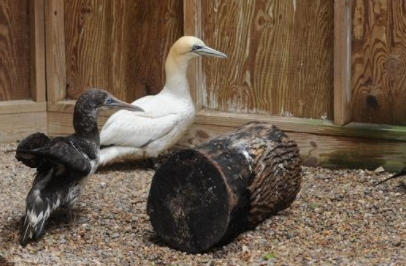
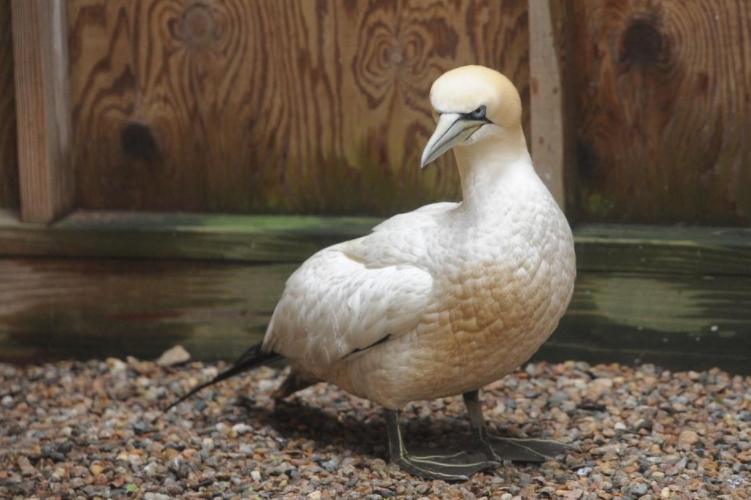
Big birds, with wingspans approaching six feet and heavy, durable bodies topped with a formidable beak.
Spectacular hunters, working big schools of herring and mackerel, northern gannets spend most of their life far out to sea and nest up north in Quebec and Newfoundland. The only time they are ever seen onshore around Cape Cod is during a major storm when flocks huddle out of the wind on the flats of Cape Cod Bay.
“I love those birds,” said Ellis. “They are so strong and fierce.”
Their big webbed feet are used to propel the birds through the water after spectacular dives on folded wings from upward of 130 feet in the air, down as deep as 72 feet below the surface. As elegant as they are in the air and water, they are not built for walking on land.
But the birds had far worse problems than tripping over two oversize feet, according to Ellis, Mertz and their staffs.
“They were unable to hold their head up, they had tremors and were unable to control their body movements,” Ellis said. “To us, that usually suggests a toxin or trauma.”
Birds with a long-term illness or injury often stop feeding and are emaciated when they are recovered. But these gannets were within a normal weight range and their blood work appeared normal, Ellis said.
“What this tells us is that whatever is happening to them is hitting them quickly,” she said. Domoic acid and saxotoxin, both biotoxins created by algae, have caused neurological disorders and have been known to kill seals, sea lions and even whales who are feeding on fish that have been eating the algae.
Whatever it is, it’s been deadly, killing 16 of the 21 gannets that Wild Care worked on.
“The staff vet and myself have been in the field for many years. This is the first time we have seen gannets affected by this,” Mertz said. “We are sort of figuring out if this is disease-based or toxicosis, diet-based.”
“The sentiment out there is that this may be a virus passed bird to bird or by ticks or fleas (at nesting sites,)” Mertz said.
Necropsies have thus far been inconclusive.
The Cape Wildlife Center is affiliated with New England Wildlife Center and the regional facility has been reporting sick and dying gannets washing onto beaches in Duxbury, Hingham and Cohasset, covering 60 to 70 miles of coastline, Mertz said.
But the bulk of affected animals have come ashore on the Atlantic side of the Outer Cape towns of Provincetown, Truro, Wellfleet and Eastham, Mertz and Ellis said.
U.S. Department of Agriculture wildlife technician Ryan Bevilacqua said his agency sent tissue, blood and other samples taken from dead birds to the Southeastern Cooperative Wildlife Disease Study at the University of Georgia veterinary medicine program. Analysis has ruled out avian flu, Bevilacqua said. He estimated as many as 100 northern gannets have been affected. That’s not going to impact the population which is believed to be stable at nearly 130,000 individuals.
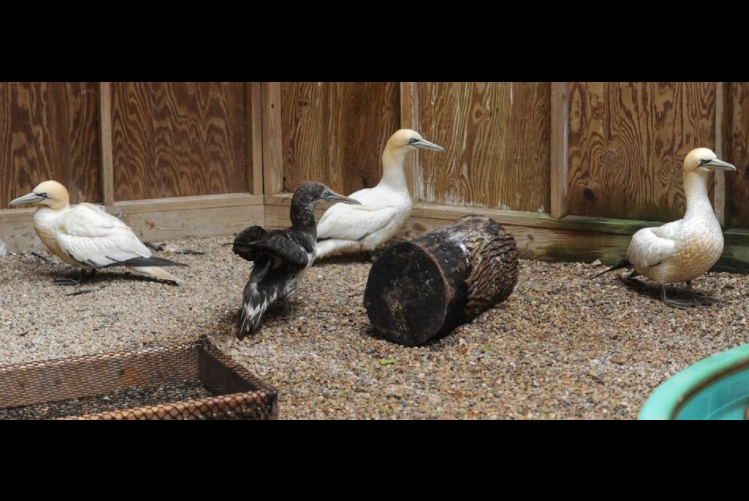
Wild Care has five gannets in its care, four of which survived the mysterious ailment. Nursing such large animals back to health is labor intensive and expensive, Ellis said, especially at a busy time of year with young injured and abandoned animals and birds coming in. Both facilities have more than 100 patients now.
“It does not smell good,” Ellis said.
They are then fed fish, which they swallow whole. Rehabilitators place them in pools to encourage them to preen and spread the oil that helps waterproof them against the icy North Atlantic.
“They need to be 101 percent waterproof,” Ellis said. “It is one of the most critical things for us in assessing their readiness for release.”
Then, it’s time to load them on a boat and return them to sea
“It saddens me, because they should be farther north and breeding,” Ellis said. “It is my favorite bird because they are so sexy, absolutely stunning. They tuck their wings and dive like a torpedo. They are completely built for a lifestyle in the water.”
— Follow Doug Fraser on Twitter:@dougfrasercct
Story found here: http://www.capecodtimes.com/news/20170606/seabirds-washing-up-and-dying-on-cape-cod-beaches

Dance the Night Away with Live Music from Alex Torres & His Latin Orchestra
Join Wild Care for an exciting night of live music & dancing featuring Alex Torres & His Latin Orchestra.
READ ALL NEWS
CALENDAR OF EVENTS
14 November, 2026
Dance the Night Away with Live Music from Alex Torres & His Latin Orchestra
EVENT DETAILS
19 October, 2026
Watch Oscar the Osprey Chick on Live Cam!
EVENT DETAILS
19 October, 2026
Celebrate International Owl Day at Cape Cinema With Wild Care!
EVENT DETAILS
DID YOU KNOW??
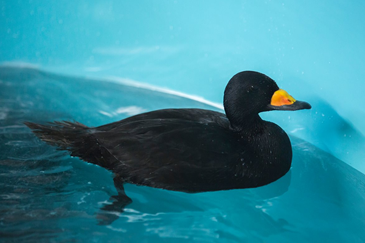
Wild Care has a state-of-the-art seabird therapy pool, which allows seabirds and waterfowl to exercise on running water. This will help our bird friends recover more quickly so they can get back to their watery habitats!